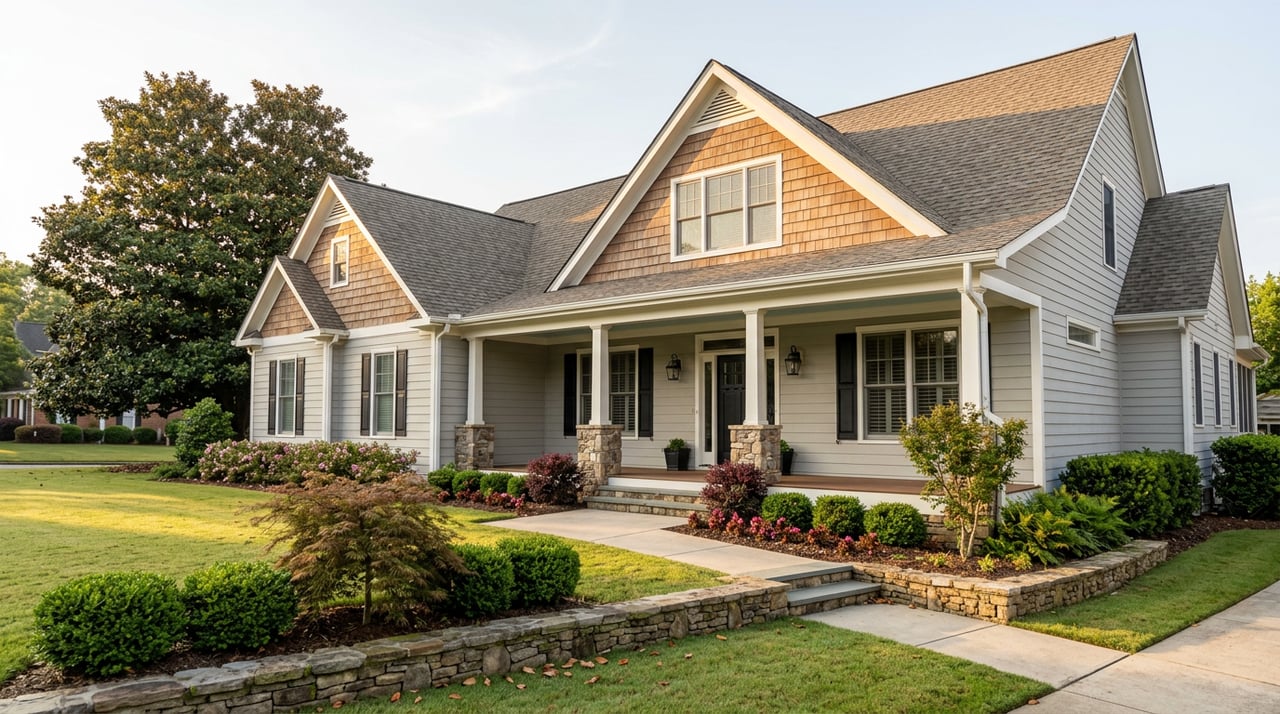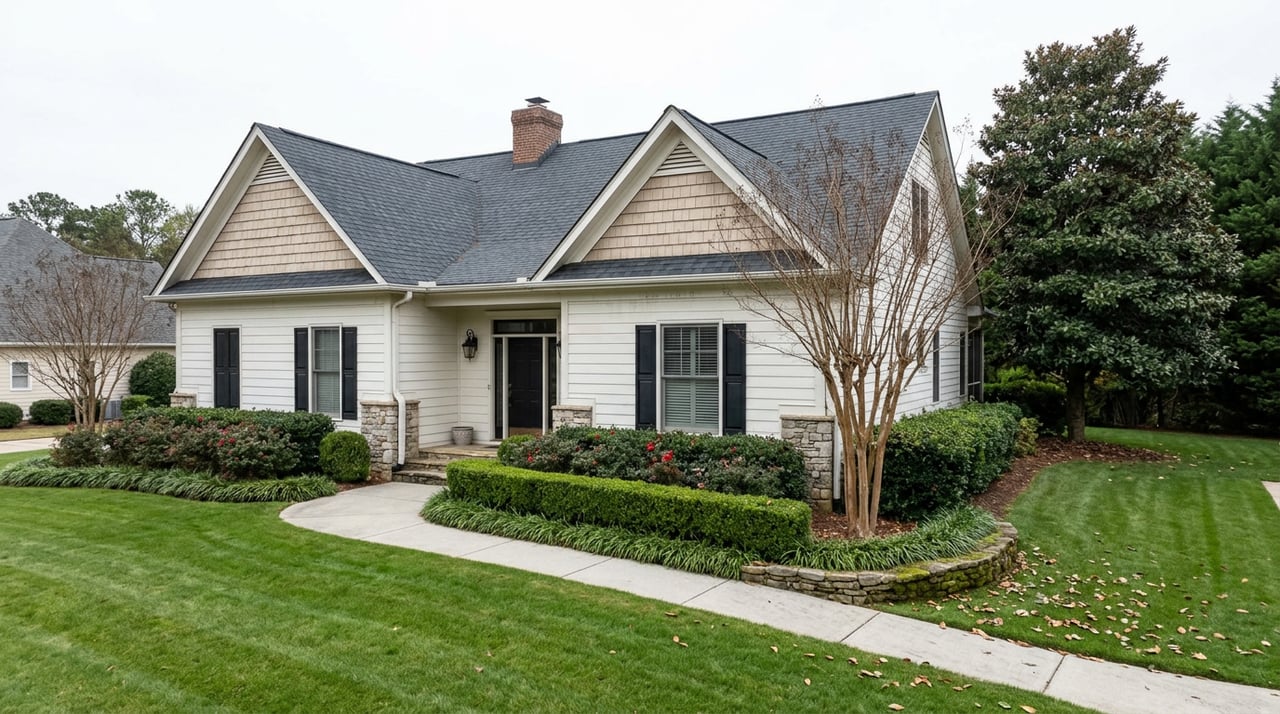
The Evans median is doing more hiding than showing. Depending on which data feed you trust, the "typical" Evans home sits somewhere between $408,329 and $475,000 in May 2026, a spread wide enough to drive a moving truck through. That gap is not a data error. It is three different Evans markets sharing one ZIP code, and buyers who shop the median instead of the band they actually qualify for tend to either overpay or lose the house they wanted.
Here is the argument this post makes: the countywide "buyer's market" headline you have read elsewhere is only accurate for one of Evans's three price bands. The entry tier still clears quickly. The upper tier sits. The middle tier is where the leverage everyone is talking about actually lives, and it is the only band where the 2026 negotiating rules of thumb reliably work.
The three markets inside 30809
Columbia County as a whole is now sitting on roughly seven months of housing supply, well above the 4-to-6-month range that typically defines a balanced market. Zoom in and Evans splits cleanly along price. Redfin's three-month window ending May 2026 shows homes selling after 24 days on average, compared to 53 last year, with 132 homes sold in May, up from 111. Movoto, measuring a broader listing pool, reads Evans as a median of $475,000 in May 2026 with 96 days on market. Both are correct. They are measuring different bands of the same market.
| Band | What it buys in Evans | 2026 behavior |
|---|---|---|
| Entry ($250K–$350K) | 3-bed, 1,800–2,100 sq ft resales in older subdivisions; some newer townhomes | Fastest turnover; often absorbed by first-time and relocating buyers |
| Core ($400K–$550K) | 4-bed, 2,500–3,200 sq ft in established master-planned communities | Where most price reductions and negotiations are happening |
| Upper ($600K–$900K+) | 5-bed, 3,500+ sq ft on larger lots; pool homes; premium new construction | Longest days on market; sale-to-list gap widens |
The Evans, GA range described by one local agent runs from about $200,000 to over $600,000 depending on the neighborhood, and the county's own MLS-fed feeds show recent Evans sales as varied as a $269,900 three-bedroom on W Amelia Drive that closed at list after 33 days on market and a $567,900 five-bedroom on Woodbridge Circle that sold 2% under a $597,900 list after 276 days. Same city, same season, different market physics.
Where the buyer's market is real, and where it is a mirage
The number driving national headlines about the Augusta metro is a big one. In February 2026, roughly 83% of active listings saw a price reduction, up from 49% a year earlier, and the sale-to-list price ratio dropped to about 95.26%, meaning a home listed at $400,000 is closing around $381,000 on average. Applied to a $475,000 Evans list, that same math suggests a $452,000 close. Applied to a $275,000 Evans starter, it suggests a $262,000 close. Only one of those results is what the market is actually delivering.
In the entry band, price reductions are much less common because the initial pricing is closer to what buyers can afford at current rates. Freddie Mac's Primary Mortgage Market Survey showed the 30-year fixed averaging around 6.22% to 6.37% in early April 2026, and at those rates the $250K–$350K band is where the payment math works for the widest pool of buyers, including first-time buyers and military families relocating to Fort Gordon. When a starter in Evans is priced right the first time, it moves. The 83% figure is a metro-wide average dragged upward by the mid and upper bands.
In the core band, the leverage story is real. A move-up buyer touring $450K–$550K homes today should expect that most listings on the market have already been reduced at least once, that sellers are open to negotiation on price and concessions, and that closing 3% to 5% under list is realistic on any listing that has been sitting more than 30 days. This is the band where Evans buyers have the widest selection in years, with neighborhoods like Mullins Crossing, West Lake, River Island, and Cambridge all showing more inventory than usual, so if you have been waiting for a specific floor plan or lot, this is the spring to look.
The upper band is a different animal. When a $597,900 listing closes at $567,900 after nine months, that is not a "buyer's market" in the ordinary sense. It is a thin market with fewer comparable transactions, longer marketing periods, and pricing that depends heavily on the specific lot, finish level, and neighborhood. The rules of thumb do not apply cleanly, which is exactly when working with someone who has closed transactions in that band matters most.
What the named neighborhoods actually deliver
Mullins Crossing. Sits on the retail-adjacent side of Evans, where the price-per-square-foot math benefits from walkability to services. Buyers looking at the core band here are usually trading yard depth for convenience.
West Lake. One of the county's established golf-oriented planned communities. Inventory in 2026 is broader than usual, which means buyers in the core-to-upper transition can be picky about lot orientation and update level rather than settling for whichever house is on the market that weekend.
River Island. The gated, amenity-heavy end of the Evans upper band. Homes here are the ones most likely to sit past 90 days and most likely to reward a patient, well-prepared offer once a listing has been on the market long enough to reset expectations.
Cambridge. A more contained, family-oriented pocket that trades on floor-plan consistency. Because the housing stock is comparable within the neighborhood, comps are cleaner and pricing arguments in negotiation carry more weight than they do in mixed-vintage areas.
Knob Hill. Established, larger-lot Evans. A recent listing here, 715 Avrett Circle, a five-bedroom, four-bath brick ranch on a nearly half-acre corner lot, is the kind of home that never quite fits the median discussion because it is competing against both the core and upper bands depending on condition.
None of these are interchangeable. A buyer with a $525,000 approval who tours all five in the same weekend is looking at five different value propositions, and the negotiation posture in each is different.
The offer math changes by band
If the countywide sale-to-list ratio is 95%, that is a starting point for a mid-band offer, not a rule. Use it to price the seller's likely floor, then back into what they need to net.
The mechanism that produced the 83% reduction rate is worth naming plainly. Sellers who bought or refinanced in 2021 through early 2023 anchored their price expectations to a peak that no longer exists at 6%+ rates. Listings hit the market at that anchor, sit, reduce, sit, reduce again, and eventually clear near the number a rational buyer would have paid on day one. The reduction is doing the work that correct initial pricing would have done more efficiently.
For a buyer, the practical translation is this. On any Evans core-band listing that has been on the market longer than 45 days and has already taken a reduction, an offer 3% to 5% below current asking, with reasonable concessions requested, is inside the seller's likely walk-away zone. On a fresh listing priced to current comps, it is not. Days on market is the tell, not the list price.
For the upper band, days on market matters even more. A 276-day marketing period, as with the River Oaks Lane home that closed 5% under list, signals a seller who has moved emotionally and financially into acceptance. A 30-day listing at the same price point signals a seller who is still testing.
The larger backdrop keeps Evans's floor firmer than most metros. The Fort Gordon expansion, now the cyber command hub, brings over 17,000 new personnel, civilians, contractors and family members to the area, with strong Basic Allowance for Housing rates that make Evans, Grovetown, and Martinez particularly attractive. Migration data from late 2025 shows Atlanta homebuyers searched to move into Evans more than any other metro, followed by New York and Washington. Demand at the entry and core bands is not disappearing. It is just no longer willing to overpay.
FAQ
Why do Zillow, Redfin, and Movoto disagree on the Evans median?
They are measuring different things. Zillow's $408,329 as of May 31, 2026 is a modeled home value index across the housing stock. Redfin's $407K median sale price over the three months ending May 2026, up 8.2% is closed transactions. Movoto's $475,000 in May 2026 reflects a listing pool weighted toward the current on-market inventory, which skews higher when the upper band is sitting longer. Same market, three lenses.
Is Evans still appreciating or flattening?
Both, depending on band. Redfin's YoY figure is up 8.2% for closings, while Zillow's ZHVI reads a much flatter 1.3%. The reconciliation is that the mix of what is closing has shifted toward higher-quality, better-priced homes, even as the underlying values in the middle of the stock are essentially flat.
How long should I expect a well-priced Evans home to sit?
In the entry band, weeks. In the core band, one to two months if priced correctly, longer if anchored to 2022 comps. In the upper band, plan for a full season and price the marketing period into your net-proceeds math from day one.
Does the 83% reduction rate mean I should lowball every listing?
No. It means most sellers have already done part of the work of meeting the market. The listings that have already reduced are usually closer to fair value than a fresh listing at an aspirational number. Days on market and reduction history matter more than a blanket discount rule.
If you are shopping the Evans market this summer, the difference between a good outcome and a frustrating one usually comes down to reading the correct band, not the citywide median. The Moss Group works these bands every week and can walk you through what your specific price point is actually buying right now. Request a complimentary home valuation or schedule a consultation with Lisa to map your search or your sale against the current Evans data.